What is the working principle of the control panel of a Foam CNC Router?
Leave a message

As a supplier of Foam CNC Routers, I often encounter inquiries from customers regarding the working principle of the control panel of these machines. In this blog post, I will delve into the intricacies of how the control panel of a Foam CNC Router operates, providing a comprehensive understanding of its functionality.
1. Introduction to Foam CNC Routers
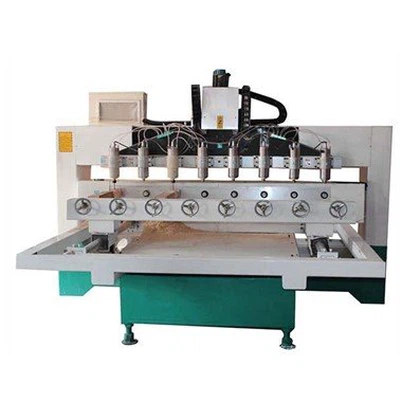
Foam CNC Routers are advanced machines designed for precise cutting and shaping of foam materials. They are widely used in various industries, including packaging, advertising, and insulation. These routers utilize computer numerical control (CNC) technology to automate the cutting process, ensuring high accuracy and repeatability. The control panel is the heart of the Foam CNC Router, allowing operators to program, monitor, and control the machine's movements.
2. Components of the Control Panel
The control panel of a Foam CNC Router typically consists of several key components:
2.1 Human - Machine Interface (HMI)
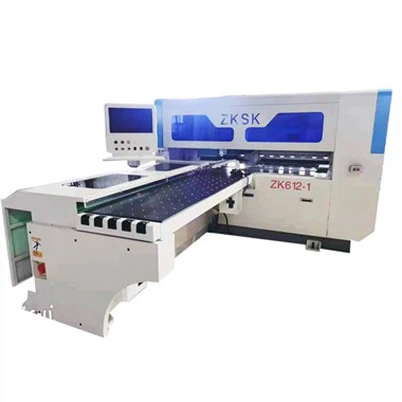
The HMI is the primary interface between the operator and the machine. It usually includes a touch - screen display that provides a user - friendly environment for inputting commands, viewing machine status, and adjusting settings. Through the HMI, operators can load cutting programs, set parameters such as cutting speed, feed rate, and depth of cut, and monitor the progress of the cutting process in real - time.
2.2 Controller
The controller is the brain of the control panel. It receives instructions from the HMI and translates them into electrical signals that control the movement of the router's axes. The controller is responsible for coordinating the motion of the X, Y, and Z axes, ensuring that the cutting tool follows the programmed path accurately. Modern controllers are often based on advanced microprocessors and use sophisticated algorithms to optimize the cutting process.
2.3 Input/Output (I/O) Modules
I/O modules are used to interface the controller with external devices such as sensors, limit switches, and motors. They allow the controller to receive feedback from the machine's sensors, such as the position of the cutting tool, and send control signals to the motors to drive the axes. For example, limit switches are used to define the boundaries of the cutting area, and the I/O modules ensure that the machine stops moving when the cutting tool reaches these limits.
2.4 Power Supply
The power supply provides the necessary electrical power to the control panel and the machine's components. It is designed to convert the incoming electrical power from the mains supply into the appropriate voltage and current levels required by the controller, motors, and other electronic components. A stable and reliable power supply is crucial for the proper operation of the Foam CNC Router.
3. Working Principle of the Control Panel
3.1 Program Loading
The first step in operating a Foam CNC Router is to load a cutting program into the control panel. Cutting programs are created using computer - aided design (CAD) and computer - aided manufacturing (CAM) software. These programs define the shape and dimensions of the foam piece to be cut, as well as the cutting path and parameters. Once the program is created, it can be transferred to the control panel via a USB drive, Ethernet connection, or other data transfer methods.
3.2 Parameter Setting
After loading the cutting program, the operator needs to set the appropriate cutting parameters on the HMI. These parameters include the cutting speed, which determines how fast the cutting tool moves through the foam; the feed rate, which controls the rate at which the foam is fed into the cutting tool; and the depth of cut, which specifies how deep the cutting tool penetrates into the foam. The operator can also set other parameters such as spindle speed, coolant flow (if applicable), and tool compensation.
3.3 Axis Movement Control
Once the program is loaded and the parameters are set, the controller begins to execute the cutting program. It sends electrical signals to the motors that drive the X, Y, and Z axes of the router. The motors convert these electrical signals into mechanical motion, causing the cutting tool to move along the programmed path. The controller continuously monitors the position of the cutting tool using sensors and adjusts the motor signals as needed to ensure accurate positioning.
For example, if the cutting program requires the cutting tool to move in a straight line from point A to point B, the controller calculates the distance and direction between the two points and sends the appropriate signals to the motors. The motors then drive the axes to move the cutting tool along the straight line at the specified speed.
3.4 Real - Time Monitoring and Feedback
During the cutting process, the control panel continuously monitors the machine's status and provides real - time feedback to the operator. The HMI displays information such as the current position of the cutting tool, the remaining time of the cutting process, and any error messages. If a problem occurs, such as a motor malfunction or a limit switch being triggered, the control panel will immediately stop the machine and display an error message to alert the operator.
The sensors on the machine also provide feedback to the controller, allowing it to make adjustments to the cutting process. For example, if the cutting tool encounters a hard spot in the foam, the sensors can detect a change in the cutting force, and the controller can adjust the cutting speed or feed rate accordingly to prevent damage to the tool.
4. Advantages of a Well - Designed Control Panel
A well - designed control panel offers several advantages for Foam CNC Router users:
4.1 Ease of Use
A user - friendly HMI makes it easy for operators to learn and operate the machine. Intuitive interfaces with clear instructions and graphical displays allow operators to quickly load programs, set parameters, and monitor the cutting process. This reduces the training time required for new operators and improves overall productivity.
4.2 Precision and Accuracy
The advanced controller and feedback system ensure high precision and accuracy in the cutting process. The ability to precisely control the movement of the axes and adjust the cutting parameters in real - time results in consistent and high - quality foam cutting.
4.3 Flexibility
The control panel allows users to easily modify cutting programs and parameters, making it possible to adapt to different foam materials, shapes, and cutting requirements. This flexibility is essential for meeting the diverse needs of customers in various industries.
5. Our Foam CNC Router Offerings
At our company, we offer a range of high - quality Foam CNC Routers with state - of - the - art control panels. Our routers are designed to provide maximum performance, precision, and reliability. One of our popular products is the Hot Wire EPS Foam Cnc Cutting Machine. This machine uses a hot wire to cut through EPS foam with high precision, and its advanced control panel allows for easy programming and operation.
6. Contact Us for Procurement
If you are interested in purchasing a Foam CNC Router or have any questions about our products, we encourage you to contact us. Our team of experts is ready to assist you in selecting the right machine for your specific needs and provide you with detailed information about our products and services. Whether you are a small business looking for a cost - effective solution or a large enterprise in need of a high - performance router, we have the expertise and products to meet your requirements.


References
- CNC Machining Handbook, Industrial Press Inc.
- Introduction to Computer Numerical Control, Delmar Cengage Learning.