How to measure the dynamic accuracy of an ATC CNC Router?
Leave a message

Measuring the dynamic accuracy of an ATC (Auto Tool Changing) CNC Router is a crucial aspect for both manufacturers and users. As an ATC CNC Router supplier, I understand the significance of ensuring that these machines meet the highest standards of accuracy in dynamic operations. In this blog post, I will delve into the various methods and considerations for measuring the dynamic accuracy of an ATC CNC Router.
Understanding Dynamic Accuracy
Before we dive into the measurement techniques, it's important to understand what dynamic accuracy means in the context of an ATC CNC Router. Dynamic accuracy refers to the ability of the machine to maintain precise positioning and cutting performance while in motion. This is particularly important in high - speed machining operations where the router is constantly moving and changing tools.
In an ATC CNC Router, dynamic accuracy is affected by several factors. These include the mechanical structure of the machine, the quality of the linear guides and ball screws, the control system, and the tool - changing mechanism. Any deviation in these components can lead to errors in the final workpiece, such as inaccurate dimensions, poor surface finish, or misaligned cuts.
Importance of Measuring Dynamic Accuracy
Accurate measurement of dynamic accuracy is essential for several reasons. Firstly, it ensures that the ATC CNC Router can produce high - quality workpieces consistently. In industries such as woodworking, furniture manufacturing, and signage production, precision is key. A small error in the dynamic accuracy can result in defective products, which can lead to customer dissatisfaction and financial losses.
Secondly, measuring dynamic accuracy helps in identifying potential issues with the machine early on. By detecting problems such as excessive vibration, backlash, or misalignment, manufacturers can take corrective actions before they cause significant damage to the machine or affect its performance. This can save time and money in the long run by reducing downtime and maintenance costs.
Methods for Measuring Dynamic Accuracy
Laser Interferometry
Laser interferometry is a widely used method for measuring the dynamic accuracy of CNC machines, including ATC CNC Routers. This technique uses a laser beam to measure the displacement of the machine's axes with high precision. A laser interferometer system consists of a laser source, a beam splitter, and a detector. The laser beam is split into two paths: one is directed along the axis being measured, and the other serves as a reference.
As the machine moves, the displacement of the axis causes a change in the optical path length of the laser beam. This change is detected by the detector, and the data is analyzed to determine the accuracy of the axis movement. Laser interferometry can measure linear displacement, straightness, and angular errors with a high degree of accuracy, typically in the range of micrometers.
One of the advantages of laser interferometry is its high precision. It can detect even the smallest errors in the machine's motion, which makes it suitable for measuring the dynamic accuracy of ATC CNC Routers. However, it is also a relatively expensive and complex method, requiring specialized equipment and trained personnel to operate.
Ballbar Testing
Ballbar testing is another popular method for measuring the dynamic accuracy of CNC machines. This technique involves attaching a ballbar, which is a precision - calibrated bar with a ball at each end, between the machine's spindle and a fixed point on the table. As the machine moves in a circular or linear path, the ballbar measures the distance between the two points.
The data collected from the ballbar is then analyzed to determine the accuracy of the machine's motion. Ballbar testing can detect errors such as backlash, contouring errors, and servo - loop mismatches. It is a relatively simple and cost - effective method, and it can provide valuable information about the overall dynamic performance of the ATC CNC Router.
However, ballbar testing has some limitations. It mainly measures the combined accuracy of multiple axes, rather than the individual accuracy of each axis. Also, it is more suitable for detecting errors in circular or arc - shaped motions, and may not be as effective for linear motions.
Touch Probe Measurement
Touch probe measurement is a method that uses a touch probe to measure the position of the machine's cutting tool or workpiece. The touch probe is a device that can detect the contact between the probe tip and the surface being measured. When the probe makes contact, it sends a signal to the machine's control system, which records the position of the probe.
By using a touch probe, it is possible to measure the accuracy of the machine's positioning and cutting operations. This method can be used to measure the dimensions of the workpiece, the alignment of the cutting tool, and the accuracy of the tool - changing process. Touch probe measurement is relatively easy to use and can provide real - time feedback on the machine's performance.
However, touch probe measurement also has some limitations. It is mainly suitable for measuring the static accuracy of the machine, and may not be as effective for measuring dynamic accuracy. Also, the accuracy of the touch probe itself can affect the measurement results.
Considerations for Measuring Dynamic Accuracy
Operating Conditions
When measuring the dynamic accuracy of an ATC CNC Router, it is important to consider the operating conditions of the machine. Factors such as the cutting speed, feed rate, and spindle speed can affect the machine's performance. For example, high - speed machining operations may cause more vibration and heat generation, which can lead to errors in the dynamic accuracy.
It is recommended to measure the dynamic accuracy under the same operating conditions as the actual machining operations. This can ensure that the measurement results are representative of the machine's performance in real - world applications.


Tool Selection
The type and quality of the cutting tools used in the ATC CNC Router can also affect the dynamic accuracy. Different tools have different cutting characteristics, such as cutting force, chip formation, and tool wear. Using the wrong tool or a worn - out tool can result in inaccurate cuts and poor surface finish.
It is important to select the appropriate tools for the specific machining operation and to regularly inspect and replace the tools as needed. This can help to maintain the dynamic accuracy of the machine and ensure the quality of the final workpiece.
Machine Warm - up
Most CNC machines, including ATC CNC Routers, require a warm - up period before they can achieve their optimal performance. During the warm - up period, the machine's components heat up and expand, which can affect the accuracy of the machine.
It is recommended to allow the machine to warm up for a sufficient period of time before measuring the dynamic accuracy. This can ensure that the machine is operating under stable conditions and that the measurement results are accurate.
Conclusion
Measuring the dynamic accuracy of an ATC CNC Router is a complex but essential task. By using the appropriate measurement methods and considering the operating conditions, tool selection, and machine warm - up, it is possible to accurately assess the machine's performance and identify potential issues.
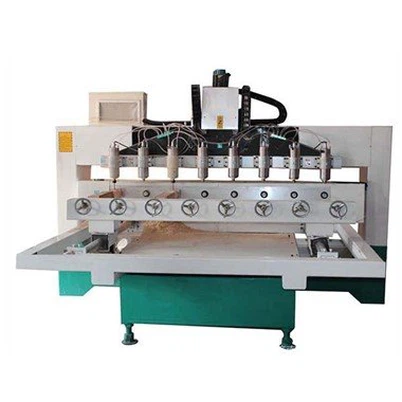
As an ATC CNC Router supplier, we are committed to providing high - quality machines with excellent dynamic accuracy. Our Auto Tool Changing 12 Cutters Woodworking Cnc Router Machine is designed and manufactured to meet the highest standards of precision and performance.
If you are interested in learning more about our ATC CNC Routers or would like to discuss your specific requirements, please feel free to contact us. We look forward to the opportunity to work with you and help you achieve your machining goals.
References
- Smith, J. (2018). Precision Measurement in CNC Machining. Machining Technology Journal, 25(3), 45 - 52.
- Johnson, A. (2019). Dynamic Accuracy Testing of CNC Machines. Manufacturing Engineering Review, 32(2), 67 - 74.
- Brown, C. (2020). The Importance of Tool Selection in CNC Machining. Woodworking Industry Magazine, 40(4), 33 - 39.