


Why choose us?
Your Professional Fiber Laser Machine manufacturer in China!
JINAN ZHONGKE CNC EQUIPMENT CO.,LTD is a professional manufacture of CNC machines for more than 15 years, we have our own workshops , warehouse and sample machine display area.

High-Quality Products
We specialize in manufacturing CNC routers, nesting CNC machines, CNC plasma cutting machines, laser cutting machines engraving machines, etc.
Wide Range of Applications
These machines can be used for wood furniture making, the decoration industry, the advertising industry, the art field, the mold production field, etc.
Export Experience
With an experienced and professional team, we have exported our products to many countries and regions all over the world.
Company Honor
We have SGS, CE certification, etc. We enjoy a good reputation among our customers. We welcome customers from all parts of the world to contact us and seek cooperation for mutual benefit.

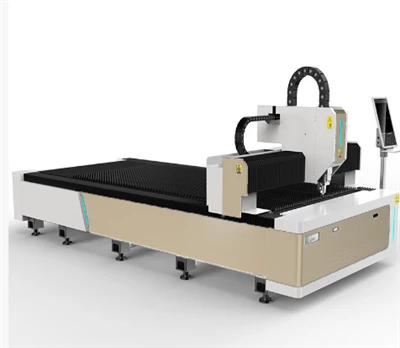

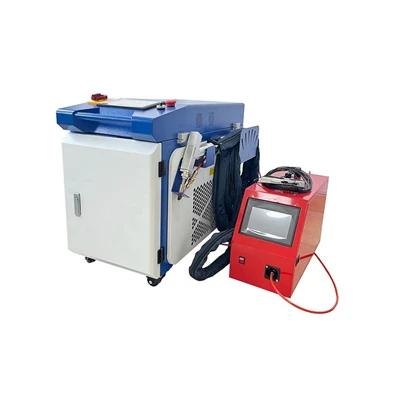


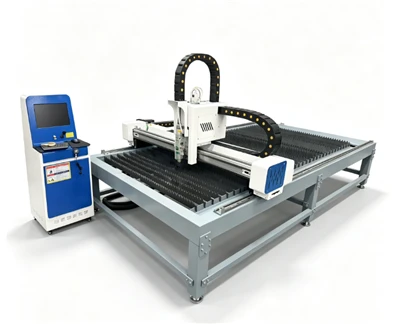


What is a Fiber Laser Machine?
Fiber laser machines use a type of solid-state laser to melt and pierce metals, achieving a precise and efficient cut. The laser medium for this technology is optical fibre, as opposed to gas or crystal, giving fiber laser cutting its name.
Fiber laser machines are useful for cutting sheet metal, including carbon steel, stainless steel, copper, brass, aluminum, and titanium. They can cut reflective materials that CO2 lasers struggle with.
Fiber laser machines have different cutting capabilities depending on their power, but almost all of them can cut a sheet of metal that is up to 13mm thick. Higher powered fiber laser machines can cut mild steel up to 2mm and stainless steel and aluminum up to 30mm.
How Does a Fiber Laser Cutting Machine Work?
Fiber laser technology generates a focused, high-powered laser beam using stimulated radiation. A laser diode emits light, which is sent to the fiber optic cable to be amplified. When this powerful laser hits the material surface, the high-intensity light is absorbed and converted into heat, which melts the surface.
A high-speed airflow that is parallel with the laser beam is used to blow away any molten material, allowing the workpiece to be cut.
The fibre laser’s first point of contact with the material must be more intense than subsequent interactions because, rather than simply cutting through the material, this first contact must pierce it. This requires using a high-powered pulse beam that works to put a hole in the material that lasts for about roughly ten seconds for a twelve millimeter sheet of stainless steel. Simultaneously, a high-speed airflow will clear out the debris to show a clear picture of the output.
Typically, a fiber laser cutting machine uses computerised digital control technology, which allows the cutting data to be received from the computer-aided design workstation. These technologies aid in controlling either the surface of the material or the laser itself towards producing a specific pattern or design.
Fiber laser cutters also have dual interchangeable platforms that ease the loading and unloading of materials. This feature enables a speedy laser cutting process while maintaining accuracy and precision.
A fiber laser cutting machine is also easy to maintain. The parts require few replacements and tune-ups, which reduces the burden and expenses of maintenance. In addition, fiber lasers use nitrogen in their cutting process, allowing for faster, more precise, and less messy cutting.

What Are The Applications Of Fiber Laser Cutting Machines?
Automotive Industry
A fiber laser cutting machine processes many parts of a car, including doors, brakes and exhaust pipes.
Kitchenware Industry
Many of the appliances found in kitchens are made of thin pieces of stainless steel which have been processed by a fiber laser cutter.
Home Appliance Manufacturing
Fiber laser cutters are being incorporated more in this industry to improve the quality of appliances and optimise their appearance.
Fitness Machine Manufacturing
Even the equipment at your local gym has been processed in part by a fiber laser cutter.
Lighting Manufacturing
Most mainstream outdoor lamps have pipes which have been shaped with the help of this machinery.
Decor & Metal Art Manufacturing
Fiber laser cutters can be used with computer numerical control to create graphic designs and patterns in sheets of metal. This means custom pieces for decoration and metal signs can be crafted.

What Materials Can a Fiber Laser Cut?
Stainless Steel
A fiber laser cutter can process stainless steel parts faster and at a lower operating costs than the CO2 laser, plasma, and water jet cutting machines.
Carbon Steels/Mild Steel
Many industries use fiber lasers to cut carbon steel and mild steel. A laser power of 6000W can process carbon steel sheets with a thickness of 22 mm. For best quality, nitrogen is used as the auxiliary gas.
Aluminum and its Alloys
Aluminum is a highly reflective metal. The fiber laser cutter used for processing pure aluminum must be equipped with a reflection absorption system to prevent damage to the device.
Copper and its Alloys
Copper and brass, like aluminum, are also reflective metals that are challenging to process. However, the process can be carried out smoothly with reflection absorbers installed.
Titanium
Titanium alloys are prevalent across all industries because of their high strength-to-weight ratio and corrosion resistance. Fiber laser can easily cut a maximum thickness of 10 mm without burning the material and causing burrs at the kerf edges. Nitrogen and argon gas are used as assist gases to cut titanium samples.
Nickel Alloys
Nickel alloys, known for their strength and resistance to corrosion, are uniquely suited for precise shaping using fiber laser cutting machines. The high-intensity beam of the fiber laser allows for clean, detailed cuts, ensuring that the inherent properties of the nickel alloys remain uncompromised during the cutting process.
Plastic
Not all kinds of plastic can be cut with a fiber laser. A few that can be cut are Polyoxymethylene (POM), Poly(Methyl Methacrylate), acrylic, lucite, and polyoxymethylene. A low-power fiber laser can ensure a smooth cutting edge and a good finish.
Cardboard and Paper
A fiber laser cutting machine can easily cut paper and rigid cardboard. With its fine-tuned laser beam, the machine can make intricate cuts, allowing for detailed designs and patterns. This capability is especially valuable for projects requiring high detail on these delicate materials, ensuring clean edges and consistent results.
What Are the Types of Fiber Lasers Machine?
Fiber laser cutting machine
These machines can cut through various metals at different speeds. They can have laser powers ranging from 1000W to 8000W.
Fiber laser engraver
These machines can carve into various materials, including metals and some plastics. They can create permanent text and patterns.
Desktop fiber laser marking machine
These machines are good for marking metals, engraving metals, and marking high-contrast plastics. They can mark at three or four times the speed of traditional marking machines.
MOPA laser
These lasers are more flexible than Q-Switched fiber lasers. They have a wide range of pulse width and frequency adjustments.
What Are the advantages of Fiber Lasers machine?
Highly Efficient Gain Medium
Unlike other lasers, fiber lasers achieve light amplification in optical fibers, which are doped with rare earth metal ions such as ytterbium (Yb3+), neodymium (Nd3+), thulium (Tm3+), praseodymium (Pr3+), or erbium (Er3+). These laser active ions can absorb most of the pump light, and then emit photons with characteristic frequencies via stimulated emission. The inherently flexible structure of fibers enables using much longer gain distances than other laser types.
Smart Feedback Loop through Fiber Bragg Gratings
Instead of using the conventional dielectric mirrors, the optical feedback in fiber lasers is usually provided by fiber Bragg gratings, a series of glass fibers with different refractive indices fusion-spliced in a periodic manner. These periodic structures can reflect the laser beam at certain wavelength and hence become the optical cavity of the fiber laser. Thus, for a fiber laser, the optical cavity is actually inside the gain medium.
Robust Optical Cavity
When talking about fiber lasers, one common pitfall to avoid is that fiber lasers are not equivalent to the lasers that have optical fibers. In fiber-coupled diode lasers for example, optical fibers are employed only for beam delivery purposes and do not involve in the physics of stimulated emission. Hence, although optical fibers are indeed coupled with the laser systems, they still do not have all the superior qualities of a fiber laser. The unique integrated optical cavity with coiled fiber as the gain medium creates a robust and stable optical cavity.
Compact Footprint
One of the key advantages of fiber lasers is their compact layout. Compared with their rivals they sport a much smaller footprint at comparable output powers. This is because optical fibers are bendable and can be coiled into compact spaces. Furthermore, the flexibility of optical fibers also make possible further customization of the optical path, giving more freedom in design for various specific situations.
High Output Power
Since the gain medium in fiber lasers are very thin and flexible, it is possible to have the optical fibers several kilometers long, and hence reach a very high gain of the pumping light. Also, due to the large surface area to volume ratio of optical fibers, the heat generated by fiber lasers can by efficiently dissipated. Thus, fiber lasers can function continuously at kilowatts levels without the need for sophisticated cooling systems.
Excellent Beam Quality
Normally, laser beam quality is interpreted as a measure of how tightly the beam can be focused, and it is quantified by an M2 factor, which is ideally equal to 1 for the highest beam quality. In a fiber laser, single-mode fibers typically offer the best beam performance, and can hence conceive significant applications. For instance, in laser cutting and welding, a high beam quality will allow for a long distance between the workpiece and the focusing object. This configuration will protect the optics from the debris and fumes. Most importantly, the reduced beam diameter can not only make possible finer structure manufacturing, but also the use of smaller and cheaper optical components.
High Reliability
Fiber lasers are of high reliability and almost maintenance-free, and since the optical path is enclosed within protective cladding layers, the laser beam is less susceptible to exterior disturbance. Thus, fiber laser usually boast excellent stability in high-temperature and vibrational working conditions.
Main Application Fields of Fiber Laser Machine
Decoration Industry
Thanks to the high speed and flexible cutting of the fiber laser cutting machine, many complex graphics can be quickly processed by efficient fiber laser cutting system and the cutting results have won the favor of decoration companies. When customers ordered a special design, the relevant materials can be directly cut out after the CAD drawing is made, hence there is no problem in customization.
Automobile Industry
Many metal parts of the automobile, such as car doors, automobile exhaust pipes, brakes, etc. can be processed precisely by fiber laser metal cutting machine. Compared with traditional metal cutting methods like plasma cutting, fiber laser cutting ensures wonderful precision and work efficiency, which highly improves the productivity and safety of automobile parts.
Advertising Industry
Due to the large number of customization products in the advertising industry, the traditional processing method is obviously inefficient, and the fiber laser metal cutter is quite suitable for the industry. No matter what kind of designs, the machine can produce high quality laser cut metal products for advertisement use.
Kitchenware Industry
Nowadays people have higher demand on the design and application of kitchenware, so kitchen-related products have a promising market around the world. Fiber laser cutting machine is very suitable for cutting thin stainless steel with fast speed, high precision, good effect, and smooth cutting surface, and can realize customized and personalized products development.
Lighting Industry
At present, mainstream outdoor lamps are made of large metal pipes that are manufactured with different cutting types. Traditional cutting method not only has low efficiency, but also can not achieve personalized customization service. Fiber laser metal plates and pipes cutter rightly serve as a perfect laser solution that solves this problem.
Sheet Metal Processing
Fiber laser cutting machine is born to process metal sheets and pipes in modern metal processing industries where precision and productivity are increasingly required.
Fitness Equipment
Public fitness equipment and home fitness equipment have developed rapidly in recent years, and the future demand is particularly large. Fitness equipment manufacturing industries have been booming with the fiber laser metal cutting technology being introduced.
Home Appliance Industry
With the development of modern technology, the traditional processing technology of the home appliance manufacture industry continues to transform and upgrade. Metal laser cutting machine is one of the most powerful processing methods in current metal processing industry. In the home appliance manufacturing process, whether it is to improve the processing quality or optimize the appearance of the product, there is much to do for fiber laser cutters.
How Long Does a Fiber Laser Machine Last?
Most online sources claim that fiber lasers last 100,000 hours whereas CO2 lasers last 30,000 hours. This is not entirely true. These numbers refer to a value called “mean time between failures” (MTBF), which isn’t the same for all fiber lasers. In reality, you will see different numbers for different types of fiber lasers.
The MTBF measures the reliability of a laser by indicating how many hours the laser is expected to function before a failure occurs. It is obtained by testing multiple laser units, and then dividing the total number of operational hours by the total number of failures.
Although this value does not exactly tell you how long a fiber laser can last, it still provides a good idea of the laser’s reliability.
If you really want to know the exact lifespan of a fiber laser, you'll be disappointed as there’s no real answer. In truth, fiber lasers have critical points in their lifetime when they can fail.
Here’s what you need to know if your laser experiences failures at any of these moments:
Early life: If a fiber laser has fabrication errors, it will likely have failures early on. You should ensure that you have a purchase guarantee that covers fabrication errors so that the laser can be replaced at no fees.
Normal life: Once you’ve passed the first critical period of early life, the MTBF value provides you a good idea of your laser’s chances of failure. A high MTBF is a good assurance that everything will go smoothly, but not a guarantee. You can prepare for failures during the normal life in different ways: have a spare laser readily available, rent a laser while yours is being repaired, or have a prolonged purchase guarantee.
End of life: When fiber lasers are near their end life, chances of failure increase drastically. Even then, a high-quality industrial laser can often operate way past its MTBF.
How to Maintain a Fiber Laser Machine
The simplest thing you can do to prolong the life of your fiber laser cutting machine is to clean it. Operators must clean the device after every job. So please, empty all slag drawers and bins before attempting a new cut. If a worker doesn’t unpack a drawer after they use it, it’ll eventually jam shut. This can dramatically affect the table shuttle. Workers must clear off the slats before attempting another cut. Remove all scraps so that the new material lays flat on the surface and doesn’t tip upward.
Once you’re confident that the slat and drawers are clean, examine the torch. The torch is the nucleus of a fiber laser cutting machine. If this part malfunctions, there will be big trouble in the future. So, workers should clean the torch body, nozzle, attached cables, and the protective window. Operators can use lint-free cloths or microfiber towels to clean these parts. Cleaning the torch helps the laser make the most precise cuts possible.
It’s crucial to clean the area around the equipment as well. Any debris or scraps that surround the machine are a safety hazard. Workers can trip over these items and severely injure themselves. So, clean up and do a thorough inspection of the area before you turn it on. Also, check over the connections and watch out for loose wires that may cause you to trip. Cleaning is a simple task that can prevent massive headaches in the future.
Much like plasma cutting systems, fiber laser cutting machines vaporize metal using heat to cut through materials. Operators must do everything they can to keep the equipment cool, so it doesn’t overheat. People must check the system’s coolers regularly to ensure they’re working as they should. Coolant levels, filters, and fans need to be cleaned so they can perform their essential functions. If a fan or a filter is covered in debris, they can’t cool the fiber laser cutting. If a fiber laser cutting machine gets too warm, this can cause detrimental issues for shop owners. You can prevent the need for major repairs by frequently checking on the machine’s cooling systems.
Fiber laser cutting machines use gas to operate. These gases assist the laser in vaporizing through a material. Contaminated gases greatly impact the quality of the cut. If you want a smooth cut every time, the gas must be as clean as possible. Inspect the gas when you can to ensure that it’s free of debris. Also, look over the filters to make sure they’re doing their job. Workers should replace the gas bottle every time they notice a leak, too. Seepages not only slow down the flow rate, but they also affect the equipment’s performance. Also, leaks are a safety hazard to operators working with the device. It’s fairly simple to fix a gas leak in a fiber laser cutting machine. First, you must make sure the device is off. Then, you can use a soapy rag to rub the connection line after you replace the gas bottle. Workers must address a leak the minute they see one. Ignoring the problem will worsen the situation down the line because productivity will decrease, and your safety could be at risk.
A fiber laser cutter must be straight to get the highest quality cuts possible. So, workers must look over the verticality of the track and the straightness of the machine every few months. When the machine is uneven, the cut is inaccurate. For starters, the edges of the material may be very jagged and not smooth. Or, the material may not be cut all the way through. Operators have to make simple changes to fix these issues. Workers can tighten bolts and screws to straighten things up. Operators should also make sure that the steel belt is tight to prevent lagging. If the problem worsens, operators should call manufacturers immediately.
Fiber laser cutting machines are essential pieces of equipment that every shop should have. These devices help metal fabrication shops be more productive. These laser devices can perform functions that no one could possibly do on their own. However, major repairs create severe headaches in the future. Significant fixes take a lot of time to fix. This means the equipment is powered off, and production stops. If you want to keep your establishment running smoothly, you must perform preventative maintenance on these machines, so it is important to know how to maintain a fiber laser cutting machine. Operators must clean the machine before they use a device. Debris greatly affects the quality of the cut. So, people must clear off the equipment to ensure things run smoothly. Surprisingly, people can use vacuums to assist them in their cleaning efforts. Vacuums can be used to clear away any unwanted dust that’s causing issues. After cleaning, operators should check the gas as well as the track. If these components are working as they should, and the machine isn’t overheated, the fiber laser cutting machine should last for years to come. If these steps are ineffective, contact the machine’s manufacturer for further assistance.
Our factory


FAQ
Q: 1.What's the Difference Between Fiber Lasers and CO2 Lasers?
Q: 2.What precautions should be taken when using a fiber laser?
Provide staff with durable goggles
Wear thick gloves
Q: 3.How deep can Fibre laser cut?
Q: 4.How long does a Fibre laser last?
Q: 5.How to operate and set up parameter of the Fiber Lasers machine?
Q: 6.Which industries can your laser equipment be used for?
Q: 7.How does the maintenance of a Fiber Laser Machine differ from other laser machines?
Q: 8.How does the wattage of a Fiber Laser Machine affect its cutting capabilities?
Q: 9.Can Fiber Laser Machines be used for deep engraving?
Q: 10.Are Fiber Laser Machines suitable for industrial production environments?
Q: 11.How to troubleshoot fiber Laser Machine?
Clean the working table and the exhaust pipe periodically to remove dust and debris.
Check the water level and temperature of the water pump. Refill or replace the water if it is too low or too hot.
Check the connection of the cables and wires. Tighten them if they are loose or disconnected.
Contact customer service if you encounter any problems that you cannot solve by yourself.
Q: 12.What are the main components of the fiber laser machine?
Q: 13.How is a fiber laser machine different from a regular laser?
Q: 14.Which materials are not suitable for laser cutting and engraving?
Carbon fibers (Carbon)
Polyvinyl chloride (PVC)
Polyvinyl butyrale (PVB)
Polytetrafluoroethylenes (PTFE /Teflon)
Beryllium oxide
Q: 15.How thick of steel can a fiber laser cut?
Q: 16.What can a 1000w fiber laser cut?
Q: 17.Can a fiber laser cut rubber?
Q: 18.How do you clean a fiber laser lens?
Wipe the lens in one direction with cotton swab dipped in ethanol.
Repeat for several times until there is no dirt on the lens.
Reinstall the lens on the laser head for next use.
Q: 19.Can you cut wood with fiber laser?
Q: 20.How powerful does a laser need to be to cut metal?
We're well-known as one of the leading fiber laser machine manufacturers and suppliers in China. Please rest assured to buy high quality fiber laser machine for sale here from our factory. For price consultation, contact us.