


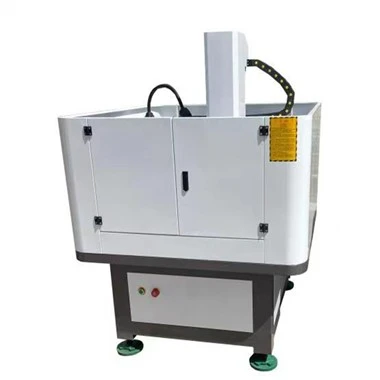
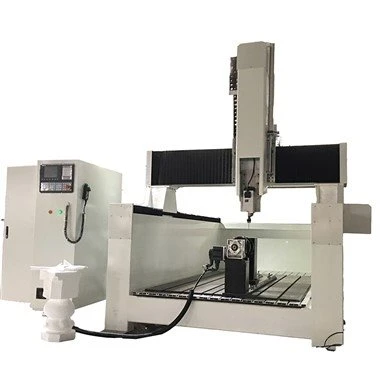
CNC milling machine is a manufacturing process that uses a cutting tool mounted on a rotating spindle to selectively remove material from a block of raw substrate. The workpiece is rigidly mounted to a table, and this table moves or rotates on different planes so the tool can work at many angles. Sophisticated CNC milling machines can have 5 or more axes of independent motion to make more complex shapes or to avoid having to move the workpiece to a separate machine.
Advantages of CNC Milling Machine
Unquestionable Precision
CNC Milling Machines, made with modern technology, outperform manual and conventional milling machines in every way. They have tools to ensure that processes are consistent and that data is tracked. These machines are the finest bet when you need the same measures from the same material at great rates.
No Need For Extensive Skills
To get the most out of traditional machines, you'll need time and practice. Experience is still a big plus when it comes to CNC milling machines. You'll never stop learning new skills and finding new ways to improve your output and quality. However, even if you have little experience with CNC milling machining, you can still produce high-quality work.
Reduced Number of Test Runs
A few test items are used in traditional machining. The operator must familiarize himself with the technology and may overlook some details during the initial phase. Test runs can be avoided using CNC systems. They use visualization technologies to show the operator what will happen once the tool passes.
No Prototypes Required
CNC software allows you to mimic your idea's production. You don't need to spend time and money on creating a prototype. You don't have to make any changes to the prototype either - unless you use the program to do so. You might be able to save weeks or months of manufacturing time this way.
Why Choose US
Our Factory
JINAN ZHONGKE CNC EQUIPMENT CO.,LTD is a professional manufacture of CNC machines for more than 15 years, we have our own workshops , warehouse and sample machine display area.
Our Product
We are located in Jinan City ,Shandong province and is specialized in manufacturing CNC routers, nesting CNC machines, CNC plasma cutting machines, laser cutting machines and engraving machines etc. These machines can be usd for wood furniture making, decoration industry, advertising industry, art field, mold production field, etc. Also have SGS, CE certification, etc.
Professional Team
With an experienced and professional team, we have exported our products to many countries and regions all over the world, especially America, Europe, Oceania and Southeast Asia. At the same time, we have a professional technical team, which can carry out on-site training and after-sales.
Rich Experience
We enjoy a good reputation among our customers. We welcome customers, business associations and friends from all parts of the world to contact us and seek cooperation for mutual benefits.
Types of CNC Milling Machine


Vertical milling
With vertical milling, a 3-axis milling table is the work surface, which sits below the arm, to which a spindle is attached.
The spindle can be stationary if a turret vertical mill is used. In this case, the table moved along both X and Y axes.
Meanwhile, the table only moves along the X-axis if a bed vertical mill is used. The spindle travels along the length of the arm in the Y-axis direction.
Horizontal milling
With horizontal milling, the spindle operates horizontally instead of vertically, and all other horizontal CNC milling machine components are similar to vertical milling.
Generally speaking, horizontal mills are best suited to heavier projects or longer projects. They are also suited to parts that require a large amount of material to be removed as the swarf falls away from the part and cutter.
Face milling
The cutting tool's axis of rotation is perpendicular to the surface of the workpiece.
It employs face milling cutters, with teeth both on the periphery and the tool face, the latter of which is used for finishing applications.
Face milling is also used to create flat surfaces and control a finished piece. Face milling can produce higher-quality finishes than other milling processes and is compatible with vertical and horizontal milling machines.
Plain milling
The cutting tool's axis of rotation is parallel to the surface of the workpiece. Plain milling cutters have teeth on the periphery that perform the cutting operation. Both narrow and wide cutters are used.
This allows for deeper cuts and for larger surface areas to be worked on. A coarse and fine-toothed cutter are both used. Slow cutting speeds and fast feed rates are used for the course cutter and vice versa for the fine-toothed cutter. This enables a more detailed final part.
Angular milling
This is a milling operation where the cutting tools' axis of rotation is at an angle relative to the surface of the workpiece.
Therefore, single-angled milling cutters can produce more angular features, such as grooves, serrations, or chamfers.
Form milling
Form milling is best used for milling operations where more irregular surfaces are involved. Contours, outlines, edges, or parts with curved, flat surfaces.
It employed milling cutters or fly cutters specialised for particular applications – for example, concave cutters or corner rounding cutters. Hemispherical or semi-circular designs or other similarly intricate designs with complex parts would benefit from the form milling technique.

The workpiece you want to machine is clamped on top of the machine table in the case of a CNC milling machine or CNC machining center. It might be fastened directly to the table or placed using a vice or fastening.
The spindle (moving part) with the cutting tool is then positioned either vertically or horizontally. The tool may move to different X-Y-Z axis on the workpiece in such a setup and begin cutting and shaping operations.
To get started, secure the workpiece to the CNC milling machine’s worktable and install the cutting tools on the spindle before starting the CNC program. When the machine is ready, the operator begins running the program and the CNC machining milling operation with the machine.
CNC milling machines will rotate the milling cutters with up to thousands of RPM, depending on the type of milling machine and milling parts application, to execute different operations: slowly feed the workpiece into the stationary rotating tool, move the tool across the stationary workpiece, or move both the tool and the workpiece with each other.
A milling cutter on a CNC milling machine may travel along several axes and spin in different directions, realizing many complicated operations to create varied milled components according to the CAD design. Note that complex and sophisticated parts may require multiple machine setups may be required.
What are the Main Components of a CNC Milling Machine
Frame
The frame is the main structure that supports the milling machine and helps to give it stability and rigidity. It usually comes with a base and detachable column/s.
An important part of the frame is the machine headstock where the main spindle is mounted on. The headstock, while important, is often overlooked. If the headstock is not rigid and fails to provide stability and support to the spindle, you could get vibrations and chattering during the machining operation. This could result in machining errors and a shorter lifespan to your cutting tool.
Spindle
The spindle can be considered as the “heart” of a CNC milling machine. It normally comprises a rotating assembly, and a tapered section where tool holders may be positioned. The shaft of the spindle is normally where the tool is attached to, usually via a tool holder.
A motor with different levels of transmission is used to rotate the spindle.
To keep your spindle in good condition over the long-term, various forms of lubrication are used. They may include Grease Lubrications (not suitable for long durations of high speed operations), Air-Oil Lubrications (sufficient for longer cycle runs at higher speeds) or the Hwacheon Oil-Jet-Lubrication (ideal for all conditions - even extreme, long and high speed applications).
Depending on the machine type, the spindle can be vertically or horizontally positioned.
Axes
In general, CNC milling machines have X / Y / Z as well as additional rotational axis or C / A or B (subject to configuration). These can be programmed using g-code in the CNC controller.
Column/s
The columns of the CNC machining center can be single (eg travelling column HiRex 4000 or also C-Frame like HiT 400 / 360; VESTA line including “B”; SIRIUS-650 / 850 / 1050) or double (SIRIUS 1250 / 2500 / L1 / L2). This depends on the level of complexity needed in the machining task.
CNC Control Panel
This is the main “nervous system” of the machine tool. It contains the electronics that helps to control the different cutting actions through programming functions. The control panel has a CNC monitor and programming buttons where data and codes can be punched in. It usually also offers a manual function. For ease of machine operation, the control panel should be easily accessible and within easy reach.
Tool / Tool Changers (Automatic Tool Changer or ATC)
These are either mounted at the column or separately mounted to the machine. The latter is preferred if larger tool changers are needed with 40 up to 300 different tools. Doing so not only helps to save time and effort - it also helps your operators to avoid unnecessary vibrations during operation.
Tool Holders
These come in many different sizes, systems and for various applications. The standard sizes for tool holders are BT 30 to BT 40 and BT 50 (BT refers to the taper angle of the cone on the holder).
Table
The table provides a solid base to clamp the work piece directly on, and can be used to mount fixtures or vice to hold the piece in place. Most of the tables use T-slots for easy clamping of vice, fixture or part.
On Horizontal CNC milling machines, pallets are also available with Tap-holes. These allow greater flexibility in moving different work pieces to be machined. Increasingly, magnets are also being used for easy, fast and secured clamping. These should preferably be built into the machines table to avoid the loss of Z-axis height.
Coolant Tank
Most CNC machining centers have a coolant tank to help supply coolant to the cutting surface or the spindle with tool during machining action. This helps to lengthen the life-span of the machine and its parts. Beyond this, the coolant will also remove heat generated by the machining action, and hence keep temperatures under control.
To hold a sufficient amount of coolant for cutting operations, the rule here is “the more, the better.” More coolant helps machine operators to avoid the warming up of coolant.
Application of CNC Milling Machine
Milling is a widespread process in the aerospace industry. CNC milling produces parts from various materials, including metals, plastics, and composites. CNC milling has many applications, and it can be used to produce parts for various products.
One example of an application for CNC milling is manufacturing aircraft components. Aircraft parts are typically made from metal or composite materials, and CNC milling is a great way to produce them quickly and accurately. It’s also helpful in producing small parts that would be difficult or impossible to machine using other methods.
Milling is a process that cuts or shapes material by rotating it around a cutting edge. This is done with a machine that is controlled by software, making it possible to produce intricate and precise parts. In agriculture, milling can make parts for everything from tractors to fertilizer machines. Here are some of the applications of CNC milling in agriculture:
Parts for tractors: Tractors need accurate parts and fit well together, which can be difficult to do using other methods. By using CNC milling, manufacturers can create parts quickly and easily, which means less time spent on repairs and more time farming.
Parts for irrigation systems: Irrigation systems use water to help plants grow. They need parts that can hold up under pressure and withstand heat, which can be challenging to make using other methods. By using CNC milling, manufacturers can create parts that are exact copies of the originals. This means less chance of mistakes and better irrigation performance for farmers.
The CNC milling process is versatile in creating intricate parts for automotive applications. The process can be used to create parts from metal, plastic, or other materials. Some of the most common uses for CNC milling are in manufacturing car parts and accessories, motor vehicles, and aircraft components.
Some of the benefits of using a CNC milling process over other manufacturing methods include creating complex parts with detailed features, increased accuracy and repeatability, and reduced processing time. Additionally, CNC milling can create indistinguishable parts from those produced using traditional machining techniques.
CNC milling is a very versatile process that can be used in many different industries. One of the most common applications of CNC milling parts is in the medical manufacturing industry. With CNC milling, parts can be quickly and accurately made without needing a lot of manual labour. Additionally, CNC milling can create parts that are much more accurate and consistent than those made using other techniques.
Safety Operation Rules Of CNC Milling Machine
》The operator must wear the labor protection supplies correctly according to the regulations. The operator with long hair must wear a working cap and tuck the hair in the cap. The rotating machine tool is prohibited from wearing gloves.
》The operator must carefully read the operation manual of the CNC mill to understand the performance, structure and principle of the CNC milling machine, and the use of super performance is strictly prohibited.
》Before starting the CNC milling machine, you must check whether all parts of the machine tool are complete and normal. The lubrication system and cooling system of the machine tool should be in good working condition. At the same time, check whether other debris is placed in the processing area to ensure smooth operation. Whether the safety protection device of the machine tool is reliable. The switches and handles are intact and in the specified position.
》Refuel according to the lubrication chart, check whether the oil standard, oil quantity, oil quality and oil circuit are normal, keep the lubrication system clean, and the oil tank and oil eyes must not be opened.
》For equipment that has been parked for more than 11 hours, it should run at a low speed for 3 to 5 minutes when it is turned on, and check the oil circuit to ensure that the oil circuit is smooth and the pipe joint is firm.
》When starting up, the operation sequence of each key should be strictly followed. The actual operation of the newcomer must be carried out under the guidance of the professionals. Without the professional's consent, unauthorized operation of the machine tool is strictly prohibited.
》When pressing each key, the force should be moderate, and the keyboard, keys and display screen should not be tapped hard.
》No other items are allowed to be placed on the work surface. When placing the indexing head, vice or heavier fixture, take it lightly to avoid touching the work surface.
》The machine tool data system and LCD screen must be kept clean to avoid data misreading.
》After the CNC system is started, the CNC milling machine should be manually operated to return the machine to the reference point.
●When not in use for a long time, after turning on the machine, first return the machine to its original point, and then warm up the spindle for about 30 minutes.
●The filter of the oil cooler should be cleaned in time, which can reduce the power consumption of the oil cooler and improve the cooling efficiency.
●Before each machining stop, move the three axes to the middle position, and then power off to clean the machine.
●Check the oil level of the spindle oil cooler every 2 months.
●The water in the air of the air source filter should be drained in time.
●Adjust the tool coolant valve to cool the cutting area of the tool with an appropriate flow.
●Do not use a high-pressure air gun to clean up after processing. Use cutting water as much as possible.
●When using water-soluble cutting fluid, adjust the water-oil ratio.
●The tool setting instrument is a very precise measuring instrument. If the surface is not clean, it will affect the measurement accuracy. Therefore, it should be protected by a protective cover when it is not in use.
●At any time when you encounter an unexpected situation, press the emergency stop button as soon as possible.
●Check the level of the machine every 6 months to ensure that the level is controlled within 0.02 / 300.
FAQ
We're well-known as one of the leading cnc milling machine manufacturers and suppliers in China. Please rest assured to buy high quality cnc milling machine for sale here from our factory. For price consultation, contact us.
cnc router modern, cnc router design, cnc router color