


Why choose us?
Your Professional CNC Machine manufacturer in China!
JINAN ZHONGKE CNC EQUIPMENT CO.,LTD is a professional manufacture of CNC machines for more than 15 years, we have our own workshops , warehouse and sample machine display area.

High-Quality Products
We specialize in manufacturing CNC routers, nesting CNC machines, CNC plasma cutting machines, laser cutting machines engraving machines, etc.
Wide Range of Applications
These machines can be used for wood furniture making, the decoration industry, the advertising industry, the art field, the mold production field, etc.
Export Experience
With an experienced and professional team, we have exported our products to many countries and regions all over the world.
Company Honor
We have SGS, CE certification, etc. We enjoy a good reputation among our customers. We welcome customers from all parts of the world to contact us and seek cooperation for mutual benefit.
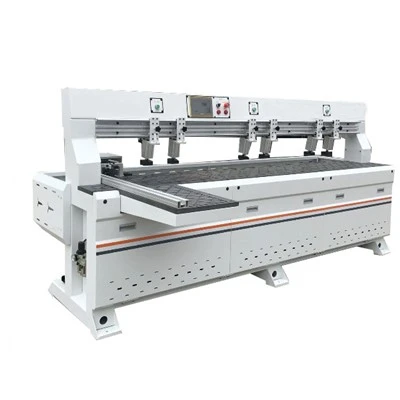


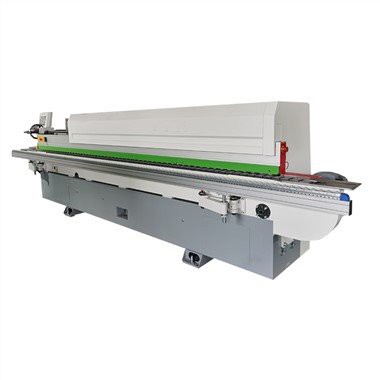


What is a CNC Machine?
CNC machines are automated machines that are operated by computers executing pre-programmed sequences of controlled commands. CNC machines are used in manufacturing for machining metal and plastic parts. CNC machines are complex machines that provide a level of efficiency, accuracy, and consistency that would be impossible to achieve through a manual process. CNC machines are the opposite of “old-school” devices that are manually controlled by hand wheels or levers, or mechanically automated by cams alone.
How Does CNC Machining Work?
CNC machining relies on computer programs to create the layout of the process in which the machine tool should function. Since users cannot directly communicate with the machine tools, Computer-Aided Design (CAD) software is used.
CAD software creates the 2-dimensional and 3-dimensional models for the required CNC machined parts. With this design, the machine knows what the final part looks like.
The computerized controls do the calculation required for removing material, so the workpiece looks like the final part created in the CAD software.

Why is Computer Numerical Control Important?
Numerical control enables machines to produce items more quickly and with better surface finishes without the need for manual machining or extensive human participation. The following are some benefits of CNC systems:
Cost Reduction
CNC machines are cost-effective and bring down the cost of production due to precision manufacturing. Energy consumption is decreased as a result of increased production efficiency, scalability and less material waste, which also lowers operating expenses. The weight of potential financial obligations related to worker safety is also lessened, which helps with cost-cutting.
Waste Reduction
The software used to run various kinds of CNC machines results in little to no waste during the manufacturing process due to simulations and repeated optimizations.
Improved Worker Safety
CNC machines minimize the chance of accidents and guarantee worker safety because there is less need for human interaction. Most modern CNC machines are self-sufficient and can be handled remotely by people for software upgrades, design changes or other preventative maintenance.
Human Error Reduction
Since human error is eliminated in the manufacturing process with CNC, it is thought to offer greater precision, complexity, speed, flexibility and repeatability. This ultimately results in fewer defects in the manufactured products.
Contour Machining
CNC provides capabilities such as contour machining, which enables milling of contoured shapes, including those produced in 3D printing and designs.
Faster MCU Programming
Some CNC systems are integrated with CAD software and computer-aided manufacturing software, which can speed the process of programming the MCU.
Improved Operational Intelligence
Integration with enterprise resource planning software and related applications, such as enterprise asset management software, can facilitate operational and business intelligence processes and help improve plant performance and maintenance.
No Bottlenecks
With the higher level of automation used, CNC systems reduce production and manufacturing bottlenecks and improve the outcome.
The Four Stages of CNC Machining
Stage 1: Creating the CAD Model
Before CNC machining begins, the 2D or 3D model of the final design is required. This model is created in CAD software. There are many CAD software programs available online, free and paid.
Creating CAD models is not difficult and can easily be learned. However, some complex parts might require more experience with CAD, for which expert designers can be hired.
Stage 2: Converting CAD Model to CNC File
No CNC machine understands CAD language directly. CNC machines only recognize movement based on coordinates. Therefore, the CAD model must be converted to a CNC understandable file called G code.
Many CAD software programs can write the output file directly in G code by using the particular setting before saving the file.
In other cases, converting the CAD design to G code will require dedicated software called Computer Aided Manufacturing (CAM). CAM software is a very functional tool when it comes to the automation of machine processes.
Besides using CAM software, many simple free tools can convert simple CAD designs to G code with the click of a button. However, they don’t have the vast suite of features that CAM software offers.
Stage 3: Configuring the CNC Machine
Before starting manufacturing processes, the CNC machine must be set up the right way. Think of this as configuring the printer before you print something. You need to feed the printer with pages and check specific settings. CNC machines operate similarly. Before machining begins, there are many setup processes to complete. For instance, you must ensure the workpiece is properly positioned on the machine. The dies must also be set correctly, and other position settings.
Stage 4: machining operation execution
Once the configuration stage is complete, the machine operation can begin. For this, you can execute the program on the display panel of the CNC machine.
Depending on what you design, you might have to go through various program prompts to choose different types of settings and options.
Once the CNC program is executed, the machine keeps going till the end of the program. It only stops if switched off by the operator or in the case of an unexpected error or power disruption.

What are the Different Types of CNC Machines?
Lathes:
This type of CNC turns the workpiece and moves the cutting tool to the workpiece. A basic lathe is 2-axis, but many more axes can be added to increase the complexity of cut possible. The material rotates on a spindle and is pressed against a grinding or carving tool that makes the desired shape. Lathes are used to make symmetrical objects like spheres, cones, or cylinders. Many CNC machines are multi-function and combine all types of cutting.
Routers:
CNC routers are usually used to cut large dimensions in wood, metal, sheets, and plastics. Standard routers operate on 3-axis coordinate, so they can cut in three dimensions. However, you can also buy 4,5 and 6-axis machines for prototype models and complex shapes.
Milling:
Manual milling machines use handwheels and lead screws to articulate a cutting tool onto a workpiece. In a CNC mill, the CNC moves high accuracy ball screws to the exact coordinates programmed instead. Milling CNC machines come in a wide array of sizes and types and can run on multiple axes.
Plasma Cutters:
The CNC plasma cutter uses a powerful laser to cut. Most plasma cutters cut programmed shapes out of sheet or plate.
3D Printer:
A 3D printer uses the program to tell it where to lay down small bits of material to build the desired shape. 3D parts are built layer by layer with a laser to solidify the liquid or power as the layers grow.
Pick and Place Machine:
A CNC “pick and place” machine works similar to a CNC router, but instead of cutting material, the machine has many small nozzles which pick up components using a vacuum, move them to the desired location and put them down. These are used to make tables, computer motherboards and other electrical assemblies (among other things.)
What are advantages of using CNC machine?
Accuracy:
They can run for 24 hours a day. CNC machines have the capability to create complex designs with high accuracy in a short amount of time.
Production:
CNC machines can produce little to no waste, and can lead to faster and more efficient production. Operators can make changes easily, which reduces the delay time.
Safety:
CNC machines are fully automated and operate without human intervention, reducing the risk of accidents caused by operator error.
Cost:
The modern design software for CNC machines removes the need of producing a prototype or model before executing a project, which saves money and time in the long run.
The Common Applications of CNC machine
Oil and gas: Manufacturing components for drilling equipment, valves, pumps, and pipelines.
Automotive Industry: Producing different parts of the automobile by casting, turning, drilling, grinding, and milling.
Medical Industry: Rapid prototyping of medical device parts.
Prototyping and Rapid Manufacturing: CNC machines enable the rapid production of prototypes and small batches of products, allowing for quick design iterations and testing.
Types of CNC Machines by Number of Coordinate Axes
Here are the different types of CNC machines according to the number of Axes traveled by the machine.
2-Axis CNC Machines
The most fundamental CNC systems available are 2-axis CNC machines. Machines in this category move in the X-axis (horizontal) and Y-axis (Vertical). Typically, these machines produce precise straight cuts, drill holes in boards, or process just one workpiece surface without moving it.
3-Axis CNC Machines
The most prevalent kind of CNC machine is the 3-axis machine. Like the 2-axis machines, machines in this category also work on immobile workpieces. These machines can work on the fundamental pieces in 2.5 dimensions. 3-axis CNC machines move in the conventional X and Y axis, with an additional Z axis for depth.
4-Axis CNC Machines
This machine has an A-axis, known as the axis of rotation, and the X, Y, and Z axes. This axis enables the rotation of the cutting tool along the X-axis. Cutouts and arc cutting are also excellent uses for these machines.
5-Axis CNC Machines
5-axis CNC provides the cutting tool with a pivoting motion along an axis called the C-axis. The C-axis is the axis on which turning and pivoting occur. These machines can machine five surfaces of material concurrently with the work surface remaining stationary, which allows them to produce intricate and precise parts. These machines are extremely helpful in making equipment used in the medical industry because of their excellent accuracy.
7-Axis CNC Machines
On CNC machines in this category, there are seven axes: three conventional axes for the workpiece’s rotation, three for the cutting tool’s movement, and one for the arm’s rotation, known as the E-axis, this axis. Due to the complexity of the parts they can make, these machines frequently produce aeronautical, medical, and military equipment.
9-Axis CNC Machines
A combined CNC system with a 5-axis milling machine and a 4-axis lathe machine is a 9-axis CNC machine. The lathe completes the workpiece’s internal features, while the milling machine works on the surface to achieve the necessary surface finish. For this reason, it is easier to produce interior and external parts’ features using a 9-axis machine. Dental implants, medical instruments, and sophisticated aircraft equipment can all be produced using these devices.
12-Axis CNC Machines
The 12-axis machines have two cutting heads that can move in X, Y, Z, A, B, and C axes. These machines increase production speed while also increasing precision by orders of magnitude.
Our Factory


3 Common Support Softwares for CNC Machining
Depending on the CNC machining process requirement, every machining uses one or more of the software listed below:
CAD Software
CAD software allows the operator to produce 2D and 3D models of physical components used in product design and manufacturing. Aside from that, they function in providing design data to manufacturers. Examples include AutoCAD (2D and 3D), Inventor (3D), Blender, and SketchUp.
CAM Software
CAM software is suitable for creating G-codes from CAD models for those controls CNC machines. Consequently, a CNC machine has automation. Top examples include Fusion 360, SolidWorks, and AutoCAD.
CAE Software
CAE software allows product designers to mimic the performance of an intended product. Consequently, they can enhance product designs and helps engineers solve engineering-related issues. Examples include finite element analysis, multibody dynamics, and computational fluid dynamics.
CNC Milling
CNC milling is a machining process that uses computerized multi-point cutting tools to shape the workpiece into the desired form and size. During CNC milling operations, the tool rotates as the CNC milling machine feeds the workpiece toward it. Generally, the feed direction is the same as the direction of the tool’s rotation. The CNC milling process can be used for a number of machining operations, such as:
●Face milling: a process that produces shallow, flat surfaces or flat-bottomed cavities.
●Plain milling: a process that can produce deep cuts or wide cuts, depending on the type of cutter employed.
●Peripheral milling: a process that produces deep cavities (e.g., slot, threads).
●Angular milling: a process that produces angular elements (e.g., chamfers, grooves, serrations).
●Forming milling: a process that produces components with curved and flat surfaces or completely curved surfaces.
CNC Drilling
CNC drilling is a machining process that uses computerized multi-point drill bits to create smooth or threaded holes in the workpiece. During CNC drilling operations, the cutting tool generally rotates and moves perpendicular to the surface of the stationary workpiece, producing vertically aligned holes. However, specialized machine configurations and workholding devices can be utilized to create angular holes.
The CNC drilling process can be used for many machining operations, such as:
●Counterboring
●Countersinking
●Reaming
●Tapping
CNC Boring
CNC boring is a machining process that enlarges the size of existing pre-drilled, forged, or cast holes in the workpiece. During CNC boring operations, excess material inside of the target hole is carefully removed. This continues until the hole is the right size/shape, of the right surface roughness, and/or in the correct position.
The CNC boring process can be performed by various machining units, such as lathes, jig borers, or boring mills. Larger workpieces are typically machined using a boring mill, while smaller components are generally machined using a lathe.
CNC Turning
CNC turning is a machining process that uses computerized single-point cutting tools to remove material from the workpiece. During CNC turning operations, the workpiece rotates while the machine feeds the tool along its surface in a linear motion to remove excess material around its diameter. The material removal continues until Close up of cnc turning machine with sparks the component has the proper diameter(s). The result is generally a cylindrical component with or without external and internal features (e.g., slots, tapers, or threads). The CNC turning process can be used for a variety of machining operations, such as:
●Boring
●Facing
●Grooving
●Thread cutting
Thread Cutting on CNC Lathes
Thread cutting is a machining process that uses an indexable threading insert in a CNC lathe to produce threads. During thread cutting operations, the CNC lathe controls the uniformity of the thread created by maintaining a programmed feed rate. The shape and size of the thread are determined by the shape and size of the threading insert.
CNC Counterboring and Countersinking
CNC counterboring and countersinking are specialized machining processes that are performed at the top of an existing hole. During counterboring and countersinking operations, the machine tool removes material at the hole opening to create space for the fastener (e.g., screw or bolt) so that it is flush with the workpiece surface when fully inserted. A countersink is conical, while a counterbore is cylindrical and usually larger in diameter than the hole’s bore.
8 Commonly Used Materials in Precision CNC Machining
Aluminum
Considered exotic in relation to manufacturing, aluminum is perhaps the most widely used CNC milling material. Ability to be machined quicker than others makes aluminum a more useful material for CNC machining. Being lightweight, non-magnetic, corrosion-resistant and inexpensive, aluminum is largely used in the production of aircraft components, automotive parts, bicycle frames, and food containers.
Stainless Steel
Stainless steel alloys are impervious to most stains and rust. Favored for its strength and resistance to corrosion, the material is used for anything from surgical equipment to electronics hardware. Stainless steel is a very versatile material and is relatively lightweight and durable, broadening its applications across industries.
Carbon Steel
Carbon steel is also one of the popular materials considered for CNC machining. It is available in a variety of formulations and you can select from them depending on your application requirements. The material is largely chosen for CNC machining owing to its durability, safety, long shelf life, affordability, and environment-friendly nature.
Brass
Widely established as one of the easiest and cost-effective materials to use with precision machining services, brass is chosen to make intricate parts that require sophisticated features. With the ease of machining, smoothness, and clean finish, brass is used in the making of medical equipment, consumer goods, electronic hardware and contacts, fittings, commercial products, among others.
Titanium
Titanium is resistant to heat and corrosion, making it a viable choice for many industrial applications. Impervious to salt, and water, titanium is widely chosen in the making of medical implants, aircraft components, and jewelry, among others.
Magnesium
Magnesium is the lightest structural metal widely used by precision machining services providers. Exhibiting excellent machinability, magnesium provides strength and sturdiness that makes it well-suited for applications across several industrial sectors.
Monel
The demand for CNC machined Monel part is all-time high. It is largely used for applications that are being exposed to corrosive environments and demand higher strengths. There are very few CNC machining shops who specialize in Monel machining, because tooling it is difficult, and requires high experience.
Inconel
It is a nickel-based superalloy, which has gained immense popularity in recent years owing to its various beneficial features. Inconel parts are suited for environments, where they may be subjected to aqueous corrosion or oxidation. It can also ideal for applications, where the parts may be subjected to extreme pressure and heat.
Other than the aforementioned materials, there are several more materials that are compatible with the precision CNC machining process. These include Carbide, Tungsten, Palladium, Invar, Nickel, Niobium, Alloy steel, Beryllium, Cobalt, Iridium, and Molybdenum, and so on. Choosing the right material is important after considering the application area which it is put to use, and other machining activities and so on. Choosing the right material from several options is crucial as it determines the success of the applications.
FAQ
Q: 1.What is CNC machine used for?
Q: 2.What can CNC machines cut?
Q: 3.What is CNC material?
Q: 4.Why is CNC so popular?
Q: 5.What are the major element of CNC?
Q: 6.Is CNC only for metal?
Q: 7.How CNC works?
Q: 8.What is parts of CNC machine?
Bed: The base of the machine.
Input device: Delivers programming instructions to the machine.
Machine control unit: Receives signals from transducers to generate control signals.
Display unit: A monitor that shows programs, commands, and other data.
Spindle drive system: Part of the machine tool transmission system.
Feed drive system: Part of the machine tool transmission system.
Electric control system: Part of the CNC machine tool.
Lighting system: Part of the CNC machine tool.
Cooling system: Part of the CNC machine tool.
Lubricating system: Part of the CNC machine tool.
Chip system: Part of the CNC machine tool.
Q: 9.How is CNC programmed?
Q: 10.What is CNC cutting?
Q: 11.What is the heart of CNC machine?
Q: 12.Is CNC a CAM or CAD?
Q: 13.What is the name of CNC?
Q: 14.What type of work is CNC?
Q: 15.How are CNC parts made?
Q: 16.Where is CNC milling used?
Q: 17.What is the function of CNC mill?
Q: 18.Who benefits the CNC machine?
Q: 19.What preparations should be made before CNC programming?
Q: 20.What are the Most Common Types of CNC Precision Machining Equipment?
We're well-known as one of the leading cnc machine manufacturers and suppliers in China. Please rest assured to buy high quality cnc machine for sale here from our factory. For price consultation, contact us.